bunker
The bunker is a hidden underground fallout shelter discovered by the man and the boy in the late stages of their journey south, stocked with vast provisions that represent a miraculous reprieve from starvation and death, yet its discovery also forces them to confront the moral and psychological weight of survival in a dead world.
Discovery and Appearance
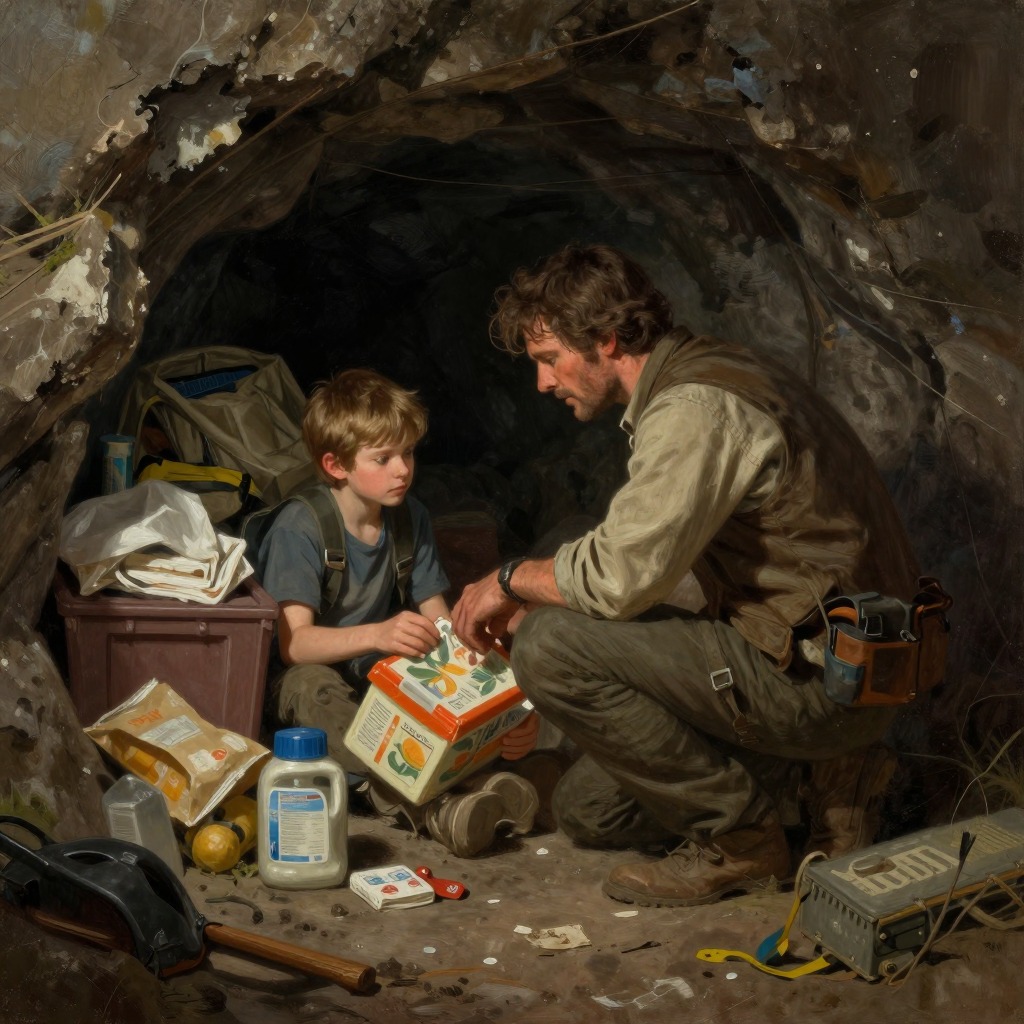
The bunker was found beneath the yard of a solitary house in a field, at the edge of a small town. The man, desperate and starving, had been testing the ground with his feet after smelling gasoline in a garden shed, and when he dug with a spade he uncovered a piece of plywood covered with roofing felt, about three feet by six, with a hasp and a padlock taped up in a plastic bag. The boy, terrified, begged him not to open it, crying and bobbing up and down with fear, but the man persisted. He chopped the hasp out with the spade, pried the door open, and descended rough stairs carpentered from two-by-tens into the darkness. The bunker was walled with concrete block, with a poured concrete floor laid over with kitchen tile. It contained two iron cots with bare springs, mattress pads rolled up at the foot in army fashion, and a small steel door leading to a second room where bottles of gas were stored. There were vent pipes in the walls covered with wire mesh and drains in the floor.
Contents and Significance
The bunker was a treasure trove of a vanished world. Crate upon crate of canned goods lined the walls: tomatoes, peaches, beans, apricots, canned hams, corned beef. There were hundreds of gallons of water in ten-gallon plastic jerry jugs, paper towels, toilet paper, paper plates, and plastic trash bags stuffed with blankets. The man found clothes, sweaters, socks, a stainless steel basin, sponges, bars of soap, toothpaste, and toothbrushes. In a plastic jar of hardware he discovered a double handful of gold krugerrands in a cloth sack, which he kneaded in his hand and then returned to the jar. He also found a box of .45 ACP cartridges and three boxes of .30-30 rifle shells, but no gun. The bunker was equipped with a gas lamp, a small two-burner gas stove, and a gas heater. The man lit the lamp with a butane lighter from a plastic box, and the warmth and light transformed the space into a tiny paradise. The boy, who had been ready to die, asked if the food was real, and the man assured him it was, explaining that the people who had stored it were the good guys and would have wanted them to use it.
Life in the Bunker
The man and the boy stayed in the bunker for several days, eating and sleeping and restoring their strength. They ate sumptuous meals: pears, peaches, ham, green beans, mashed potatoes, biscuits and gravy, and drank Coca Cola from plastic mugs. The man bathed the boy in a tub at the rear of the house, heating water on the little stove, washing his matted hair and bathing him with soap and sponges, then wrapping him in a towel and a blanket. He cut the boy's hair with a plastic comb and scissors, and shaved his own beard with a plastic safety razor. They played checkers on a board between the cots, and the man drank a little bonded whiskey he found, which made him dizzy. The boy, still fragile, asked if they could stay, but the man knew it was dangerous. He tried to conceal the hatch by dragging a mattress over it, and he whittled fake bullets from a tree branch to make the pistol look loaded. At night, rain pattered on the mattress over the door, and water leaked in and dripped down the stairs, but the bunker itself remained watertight. The man woke from a dream of strange creatures, and he realized that to the boy he was an alien from a planet that no longer existed, and that he could not construct for the child the world he had lost without constructing the loss as well.
Departure and Aftermath
After several days, the man decided they had to leave. They packed the grocery cart with as much as it could hold, tying a plastic tarp over it with bungee cords. The boy, now wearing fresh masks cut from sheeting, went ahead with a broom to clear the way, and they set out at first light. The bunker had given them a brief respite, but the man knew that staying longer would only increase the danger of discovery. The memory of the bunker's warmth and abundance stayed with them, a fleeting glimpse of a world that had been lost, and a reminder of the goodness that had once existed. The man later thought about the bunker and the people who had stocked it, and he wondered if they had died, but he knew that the food and supplies were a gift from the dead, and that they had to carry on. The bunker remained behind, a hidden cache of hope in a dead world, a testament to the possibility of preparation and care, even in the face of annihilation.